The Port of San Diego Board of Port Commissioners has certified the Environmental Impact Report (EIR) and authorised issuance of a Coastal Development Permit (CDP) for the Tidelands Avenue Electric Truck Hub, proposed by Skychargers, LLC (Skycharger).
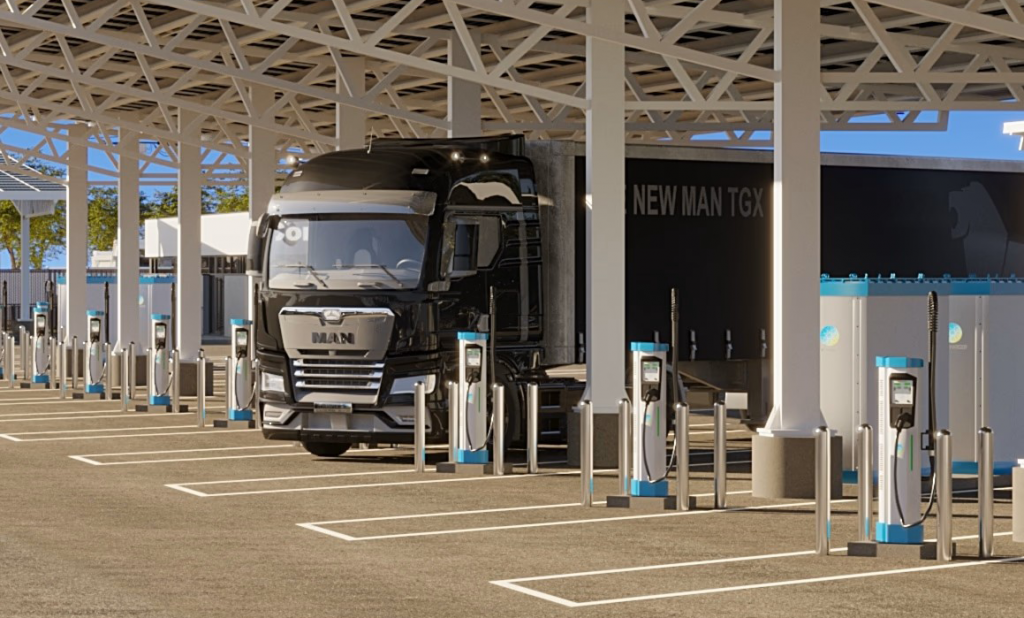
Port of San Diego backs zero-emissions truck charging hub
The Board has also authorised staff to sign a non-binding Term Sheet as lease negotiations continue.
The facility supports the Port’s Maritime Clean Air Strategy (MCAS), which is cutting diesel emissions from maritime and industrial operations around San Diego Bay.
Ann Moore, Chair of the Port of San Diego Board of Port Commissioners, said: “Projects like this reflect our continued commitment to cleaner air and a healthier San Diego Bay for everyone. By advancing zero-emissions infrastructure and supporting the transition to cleaner technologies, we are improving air quality on and around the bay while creating opportunities for more people to safely access and enjoy our waterfront.”
Andy Karetsky, CEO of Skycharger, stated: “We’re proud to reach this milestone and grateful to the Port Commissioners and the community members who have shaped our project with their input and engagement over the past three years. Our charging facility will help jumpstart the transition to electric trucks at the port, delivering cleaner air to the communities that have borne the brunt of diesel pollution for too long.”
Selected through a competitive RFP process in March 2024, Skycharger will build and operate an approximately 4.8-acre zero-emissions truck charging station with 70 charging ports for opportunity and overnight charging, alongside a convenience store and restroom facility.
The site sits at 19th Street and Tidelands Avenue near the National City Marine Terminal, on an industrial site along an existing truck route, and will primarily serve trucks calling at the Port’s two marine cargo terminals.
For energy resilience, Skycharger is proposing a 1,719-kilowatt (kW) solar array paired with a 1.9 MW/7.8 megawatt- hours (MWh) battery system.
The company is also developing a Trucking as a Service (TaaS) programme, including a 90-day trial and a five-year path to ownership, aimed at lowering the capital barrier for truck owners transitioning to zero-emissions fleets.
The Draft EIR, published for public review in January 2026, found no significant environmental impacts across air quality, energy, hazardous materials, hydrology, noise and transportation, meaning no mitigation measures are required.
Project conditions covering truck route enforcement, hazard mitigation, stormwater management and tribal cultural monitoring are included in a Monitoring and Reporting Programme. The Board certified the Final EIR on 11 August 2026.
The non-binding Term Sheet proposes a 20-year lease with a five-year extension option, combining flat and percentage rent, plus a $150,000 annual community benefit contribution from Skycharger for the full lease term.
Tel: 029 - 8618 4112
E-mail: webmaster@jiaruijidian.com
Add: No. 28, South Section of Hanguang Road, Xi'an City


